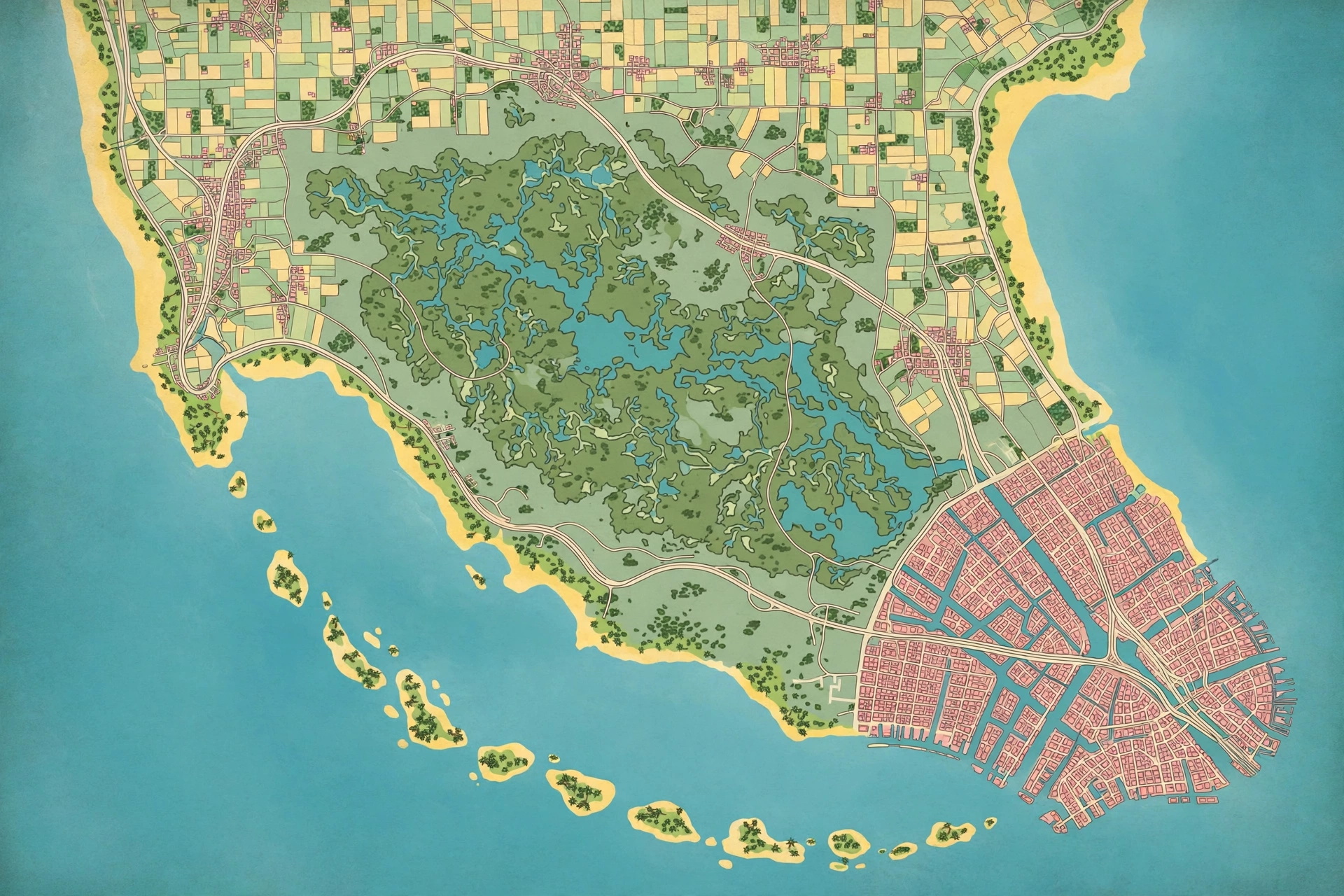
Interactive Map
Place every location in the six forecasts: the Leonida Keys, Pelican Valley, South Ocean Beach, Gambit Bay, Key Lento and the Rusty Anchor, on the community Leonida map.
Open the map →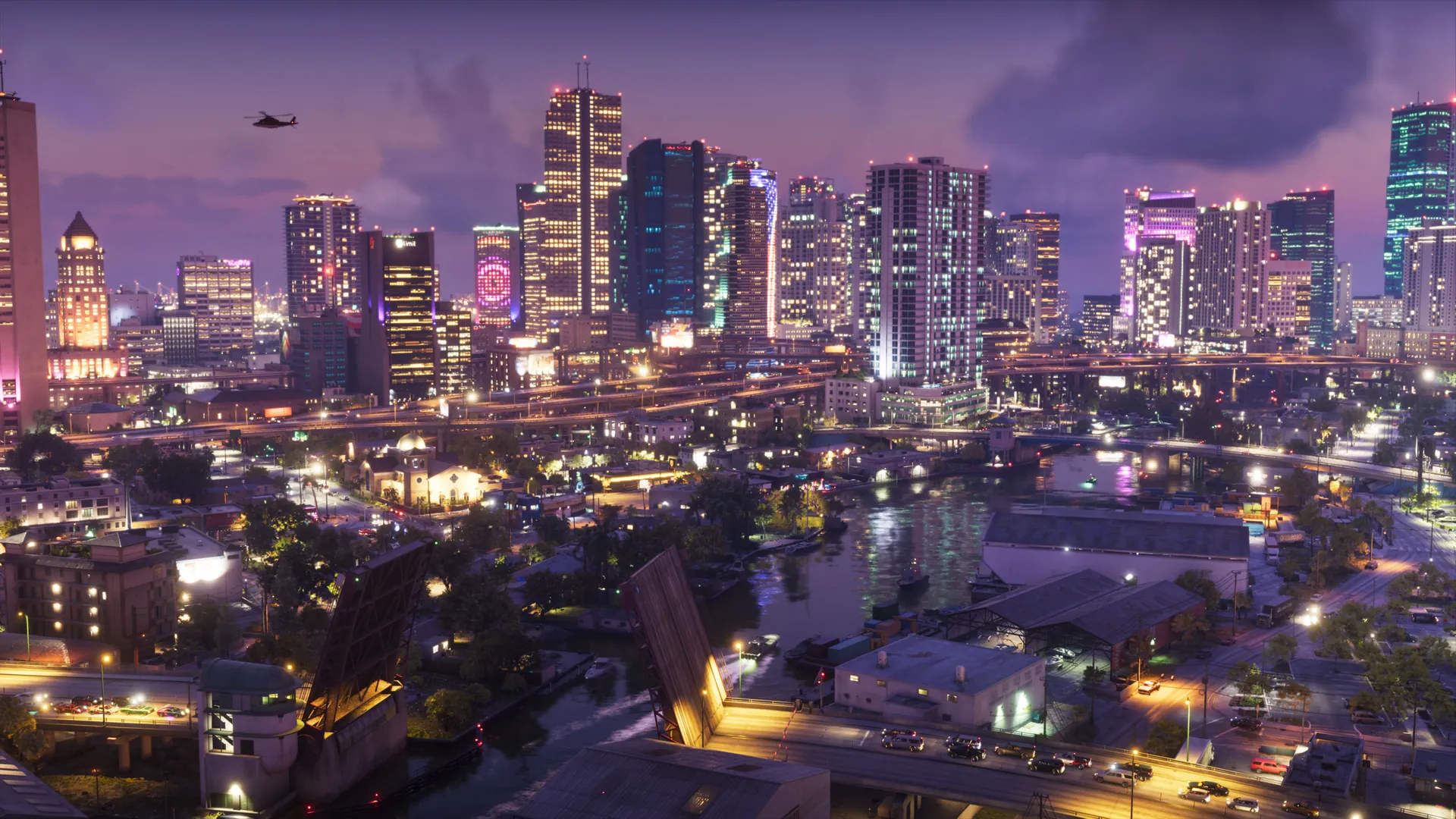
Two days before launch, Rockstar handed its weather to the people who forecast real weather. On Monday, November 16, The Weather Channel posted an exclusive look at the forecast for Leonida, built from six new official GTA VI screenshots, each paired with a local forecast for a different part of the state. Rockstar VP of Art for Light and Rendering Owen Shepherd says the team completely reimagined the in-game weather so it feels localized, persistent and dynamic. That word localized is the player news here: the storm over the swamps does not have to be the weather on the beach. This report separates what Rockstar itself supplied from what the coverage added, and it is honest about the part nobody has confirmed yet, how far weather changes the driving, boating and missions themselves.
The Weather Channel published the set on X on Monday, November 16, opening with a simple claim: nobody knows weather like we do, and that is why Rockstar gave the channel an exclusive look at the forecast for Leonida and the dynamic weather in GTA VI. Instead of a trailer or a Newswire post, Rockstar supplied six screenshots and let a real weather broadcaster present each one as a local forecast, the way it would present a Florida county.
GameSpot reported the collaboration on November 17, describing six different weather reports for locations across Leonida, each with its own conditions and local facts. Dot Esports reported the same day that Rockstar had given The Weather Channel six new screenshots showing heavy rain, tropical storms and fog, presented as local forecasts for the Florida inspired setting. Push Square carried the same set as new PS5 screenshots showing driving rain, dense sea fog, dramatic thunderstorms and mist. The four accounts agree on the source, the count and the statement. That agreement is the verification.
The set lands in a launch week already crowded with partnerships, after the NBA 2K27 crossover and the Discord makeover on the same Monday. This one is different in kind: it is not a product for sale and it is not a cosmetic theme. It is Rockstar explaining, through a borrowed forecaster, how a core system of the game world works, three days before anyone can play it.
The Keys get the most practical forecast. Heavy rain is kicking up moisture and making visibility poor in many places, and the forecast notes that local authorities have installed reflectors on some roads to help driving, with a plug for Coastal Auto Care for anyone whose headlights are not up to it. That is a named business, a named road detail and a visibility warning, all in one short forecast.
Pelican Valley gets a thunderstorm over the swamps, with murky water that makes the wildlife in it hard to spot. GameSpot names the alligators in that water, in the forecast language, as feisty nippers. Gambit Bay gets high humidity and low lying mist over the water at the start of hunting season. Together, those two forecasts tie weather directly to the wildlife side of the game: what you can see in the water depends on what the weather is doing over it.
South Ocean Beach in Vice City gets sea fog rolling in off the ocean, threatening to hide the expensive beachfront hotel views, in the morning. The Rusty Anchor gets a tropical storm over the water by the bar, with lightning and choppy seas. Key Lento gets more rain and wind on the morning commute. Six places, six different conditions, at what reads as the same moment in the same state. That spread is the system Shepherd is describing: weather in Leonida is a local condition, not a single sky applied to the whole map.
Shepherd's statement, carried in full by Dot Esports, frames the rebuild in Rockstar's own words. Leonida is a fictional world inspired by modern day Florida, and to match the fidelity of what he calls the deepest, most immersive take on the series yet, the team had to completely reimagine its weather systems to feel more localized, persistent, and above all dynamic. Persistent matters as much as local: weather that stays, rather than a brief effect that resets, is what makes a forecast worth reading before a drive.
Dot Esports adds a layer from Rockstar's earlier discussion of weather in September, when the studio confirmed that tropical storms and hurricanes would be present in Leonida. In that earlier material, rainfall can affect individual parts of the map so a player can watch a storm in the distance while standing somewhere dry, puddles and wet surfaces remain after the rain stops, rainbows can appear when the lighting conditions are right, and a wind system accounts for coastal breezes, rising warm air and buildings blocking or redirecting the wind, affecting details such as hair, loose debris, ripples on water and vegetation in the swamps.
That layer is consistent with the November 16 set, and it is reported here as exactly what it is: earlier Rockstar discussion as reported by an outlet, not wording from the Weather Channel post itself. It strengthens the picture of a local, persistent system. It does not upgrade any gameplay claim. None of it, in either layer, states that rain changes how a car grips the road, that storms change a mission, or how often a tropical storm rolls in.
Plan for visibility, because visibility is what is actually shown. A first drive through the Keys in heavy rain, a first boat run near the Rusty Anchor in a tropical storm, and a first wildlife look in Pelican Valley under a swamp storm are three different visibility problems, and the forecasts present all three as normal Leonida conditions. Our interactive map carries the named places in this set, so you can place the Keys, Pelican Valley, South Ocean Beach, Gambit Bay and Key Lento before launch night.
Do not plan around handling claims nobody has made. If a video this week tells you rain makes cars slide a specific amount, or that storms cancel missions, that is not in Rockstar's statement, not in The Weather Channel forecasts and not in the GameSpot or Dot Esports reports of them. The honest launch plan is simpler: expect the weather where you are, not the weather on the whole map, expect it to change what you can see, and learn what it changes about driving and boating in the game itself from November 19. Our First Hour Guide sets out sensible first session priorities, and weather spotting belongs on that list as an observation, not as a solved system.
This set is also the verified core for a full weather guide. Leonida Waypoint promised that guide publicly on November 16, and this report is its foundation: the confirmed forecast list and the Shepherd statement are in, the September layer is labeled, and the gameplay effects fill in from verified in game observation after launch, at which point the guide publishes and this report links to it.
The game itself answers the open questions from Thursday, November 19. Storm frequency, how long local weather persists, and whether handling, boating or missions change under heavy weather are all observable in game and verifiable against a second source in launch week. When they verify, the weather guide publishes with them, and this report is updated in place with a link.
Until then, the six forecasts are the complete official weather picture Rockstar has chosen to give: local, persistent, dynamic, and different in the Keys from what it is on the beach. For a state built on Florida, that is the forecast anyone who has driven Florida already believes.
Place every location in the six forecasts: the Leonida Keys, Pelican Valley, South Ocean Beach, Gambit Bay, Key Lento and the Rusty Anchor, on the community Leonida map.
Open the map →
Every launch week date in one place: the November 19 unlock, the unlock times by region, and the guides that fill in as the game goes live.
Read the hub →
What to do first when GTA VI unlocks, and why watching how local weather behaves belongs in that first session, before anyone claims to have solved it.
Read the guide →The confirmed facts rest on one primary source, the Rockstar supplied Weather Channel post, with four independent outlets reporting the same screenshots, locations and statement. The September details are kept at Reported, and no handling, mission or storm frequency claim is presented as confirmed, because no source in the set makes one.